
If you have ever created a yearly budget you know one thing for sure plans don’t always go as expected. Your business might expect strong sales but customer demand could suddenly drop. Raw material prices might increase or a new competitor might enter the market. By the time the year ends the original budget might no longer reflect what’s actually happening.
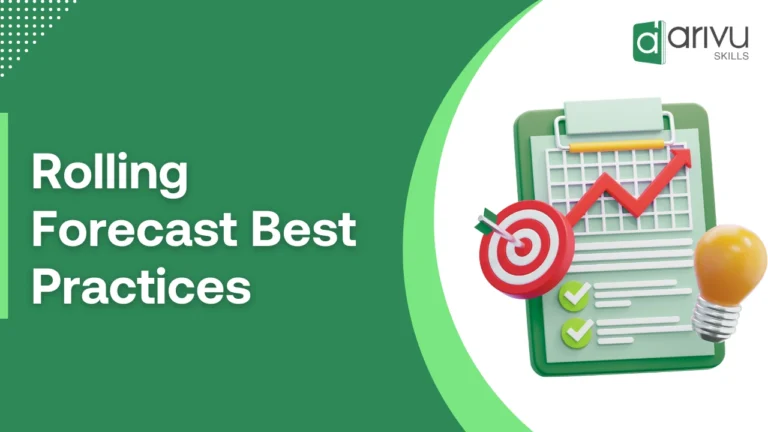
So how do successful companies deal with constant change? Instead of just relying only on a fixed annual budget many businesses use a rolling forecast. It allows them to update financial plans based on the latest information instead of waiting until the next financial year. This approach helps companies stay flexible, make smarter decisions and prepare for future opportunities or even challenges.
If you are learning financial modeling or planning a career in finance, understanding rolling forecasts is very important.
What is a rolling forecast?
It is a financial planning method that is updated regularly instead of being prepared only once a year. Unlike a traditional budget which usually ends at the end of the financial year a rolling forecast always looks ahead by a fixed amount. Like 12 months or even 18 months.
For example if your business prepares a 12 month rolling forecast in January it will cover January to December. When February arrives the forecast is updated to cover February to January of the following year the forecast keeps rolling forward every month or quarter. This means you always have an updated view of future revenue expenses, cash flow and profitability.
A rolling forecast usually follows these steps:
- Review the latest financial performance.
- Compare actual results with previous forecasts.
- Update assumptions based on current market conditions.
- Revise revenue projections.
- Update operating expenses.
- Forecast cash flow and profitability.
- Extend the forecast period by another month or quarter.
Why rolling forecasts matters and financial modelling?
Financial models are built to help you make informed decisions. But if the numbers inside the model are outdated the results won’t be reliable. That is exactly where rolling forecasts make a difference. By updating assumptions regularly financial analysts like you can create models that reflect the current business environment instead of relying on old estimates.
For example just imagine a company expected sales to grow by 20%. Halfway through the year the demand slows because of market conditions. Instead of waiting until next year’s budget the finance team updates the rolling forecast immediately. You can now reduce unnecessary expenses, revise hiring plans or even delay investments before financial problems become bigger. This makes financial models much more useful for business planning.
Rolling Forecast vs Traditional Budget
| Rolling Forecast | Traditional Budget |
| Updated regularly | Prepared once a year |
| Flexible and dynamic | Usually fixed |
| Focuses on future performance | Focuses on annual targets |
| Uses current business data | Based on assumptions made at the beginning of the year |
| Supports faster decision-making | May become outdated during the year |
Creating a rolling forecast in excel
One of the reasons Excel remains popular is financial flexibility. A rolling forecast in excel allows you to update financial data without rebuilding the entire model every month. Using excel you can update monthly sales projections, revised operating expenses and forecast cash inflows and outflows. Because of its flexibility excel continues to be one of the most widely used tools in financial planning analysis.
The role of rolling forecasts in budgeting and forecasting
No doubt budgeting and forecasting are often mentioned together but they serve different purposes. Our budget is usually prepared once a year and works like a financial plan for upcoming.. It sets the revenue targets, expense limits and investment plans. A rolling forecast however is constantly updated throughout the year.
As new information becomes valuable you can revise your expectations and adjust the future plans accordingly. This combination creates a stronger budgeting and forecasting process. For example, just imagine a retail company expecting strong holiday sales. If sales are lower than expected the rolling forecast allows management to revise revenue projections and adjust inventory.
Why do rolling forecasts matter for professionals?
Financial planning and analysts teams play a very important role in helping businesses make informed financial decisions. One of the main responsibilities is preparing forecasts that guide the management on future expenses and investment cash flow. This is the only reason why understanding rolling forecasts in excel and modern budgeting and forecasting techniques is an important skill for you as a financial professional.
Why learn financial modelling with Arivu Skills?
Understanding rolling forecasts is much easier when you learn through practical business examples rather than just reading theory. At Arivu Skills Our financial modelling course in Bangalore focus on hands-on learning that prepare you for real finance roles. You can learn how to build dynamic financial models and prepare budgets while analyzing financial statements and developing forecasting models used by businesses everyday. If you are looking for an FPA course Chennai our practical training will help you develop the skills employers are looking for.
FAQs
It is a continuously updated financial forecast that goes beyond the current reporting time. Instead of ending at the end of the financial year it is updated regularly to provide a forward looking view of business performance.
It is usually created once a year and remains fixed while a rolling forecast is updated regularly using the latest financial data.
Excel offers flexibility charts and data analysis tools that make it easier to build, update and customize rolling forecasts.
Rolling forecasts help businesses adjust their financial plans based on current performance and improve the overall budgeting and forecasting process.
Finance students, professionals , financial analysts and business owners or anyone interested in financial modeling can benefit from learning forecasting techniques.