Introduction
Are you thinking about a job that uses data but feel unsure about the words “data science” and “data analytics”? You are not the only one. A lot of people mix up these words, but they do not mean the same thing. They are both career paths that have their own goals and skills that you must have. To know the difference helps you get started on the right path for you. In this guide, you will read about what data science and data analytics are. This can help you find out which way is best for you and your plans for your work life.
Understanding Data Science and Data Analytics
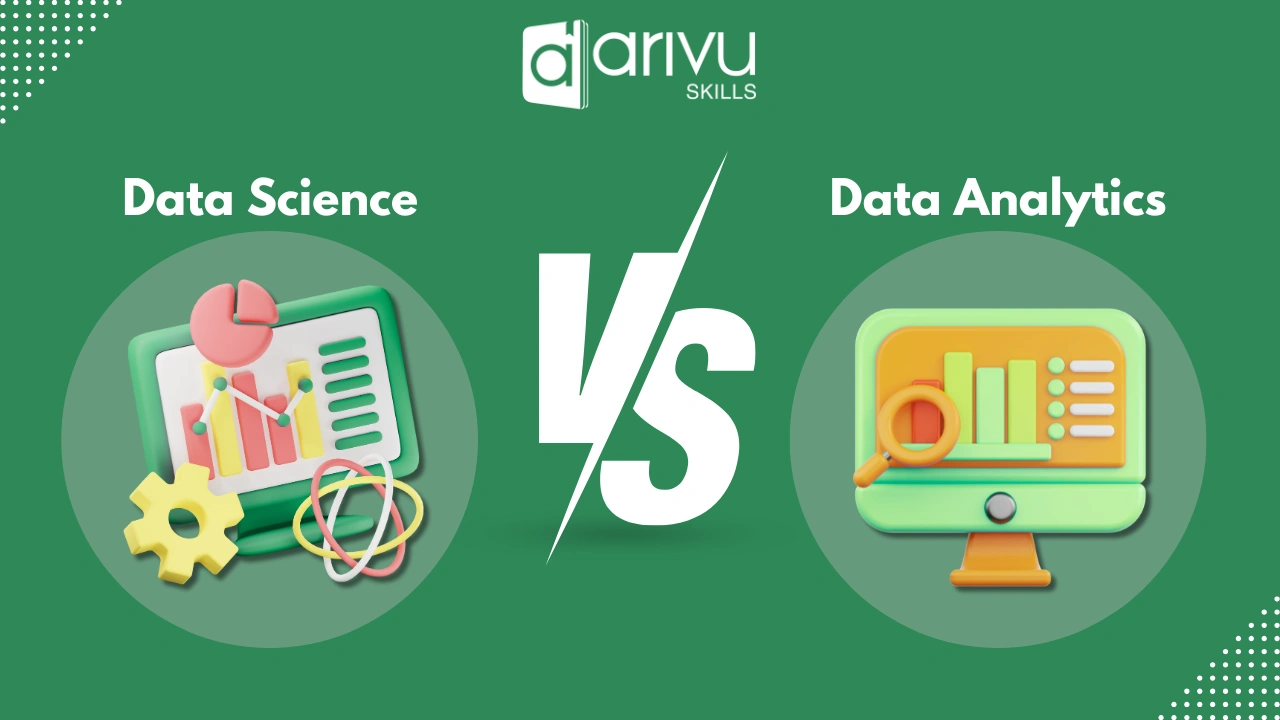
Data science and data analytics both help us understand data. But the way they do this and what they want to achieve are not the same. Data science is bigger and deals with more things at once. It often involves people from many areas working together. People use it to look for new questions and to make predictions about what will happen in the future. It also uses many types of complex algorithms.
Data analytics looks at what happened in the past. It uses historical data to answer questions that are already there. The big difference between data analytics and data science is in what they do. Data science finds new ways to model data and predict what comes next. Data analytics works with the data we have and finds meaningful insights. So, if you want to know why something happened, you use data analysis. If you want to know what might happen next, data science helps with that.
What is Data Science?
Data science brings together statistics, computer science, and expert knowledge. The goal is to find knowledge from data. It is not just about numbers. People in this field build predictive models to look at future trends and see patterns that are not obvious. Do you want to see what can happen next with data science?
People who work in this field deal with big data every day. They handle a lot of information. This can be data that is organized, or not organized. You might see things like customer transaction records or social media posts. It can even be images. The main goal is to turn all this information into helpful ideas for business.
By using advanced statistical analysis and machine learning techniques, data science helps companies see changes before they happen. It lets them make smart choices ahead of time. Data science is all about using data to build smart systems that can learn on their own. These systems can also make predictions without help.
What is Data Analytics?
Data analytics is about checking, cleaning, and shaping data. The goal is to find useful things and help you with business decisions. Data analytics is not the same as data science. Data science looks to the future, but data analytics looks at what happened before. It helps you understand your historical data. You can then use it to see what past performance says about your business today.
The main goal of data analytics is to find answers to business questions. For example, a data analyst can look at sales data from the last quarter. They use this data to see why one product did not sell well. This work is an important part of business intelligence today.
Data analysts help companies by giving them actionable insights. These insights show ways to make things work better, improve how things get done, and see what customers do. Data analysts look at old and new information. They make it into a clear story that can lead to better results for the business.
Key Differences Between Data Science and Data Analytics
There is some overlap between data science and data analytics. But the key differences are in what they do and how complex their ways are. Data science is about exploring new things and making predictions. It often deals with big or open-ended questions and complex problems. Data analytics is more about looking at and explaining things using the available data. It helps solve problems that are already known.
The skill sets needed for each job are different. A data scientist must know a lot about machine learning and programming. They use these skills to make models right from the start. A data analyst works more with databases. They spend time on data wrangling and use tools to make reports and show what they find.
Here are some of the main distinctions:
- Objective: Data science helps to predict future outcomes. Data analytics is good for explaining things that happened before or are happening right now.
- Data Type: People in data science often work with unstructured data. Data analysts mostly deal with data that is already organized.
- Scope: Data science covers more topics and can be more important for planning. Data analytics has a smaller focus and is about the daily work.
The Core Processes in Each Field
To see how these two jobs are not the same, you need to look at what they do each day. The people in both fields use a plan to work with data. Yet, the steps and ways they use can be very different. The data science process is a full cycle. It has building and using statistical models from start to finish.
The data analysis workflow is a key part of business analytics. It mostly looks at data that is already there. The goal is to read this data and make clear reports from it. These jobs can be very different. One role tries to use new ideas and deep learning to guess what comes next. The other job helps people at work by giving clear business intelligence that they can use right away. Let’s take a closer look at these lifecycles.
Data Science Lifecycle Explained
The data science lifecycle helps people solve complex problems. It starts when you have a business problem or you need an answer to a question. The next thing you do is collect relevant data. This data can come from many sources and be in different formats.
Once you have all the data, you need to spend a lot of time on data wrangling and cleaning. This means you have to find missing values, fix mistakes, and get the data ready for analysis. After the data is clean, you can do exploratory data analysis and data mining. These steps help you see first patterns and check the links between the data.
The main part of the lifecycle is data modeling. Here, people use machine learning techniques to make predictive models. After building these models, you have to test and check them to make sure they work well. When they are ready, the models go live. The last step is to keep watching the models over time. This helps keep the machine learning models performing well as time goes by.
Data Analytics Workflow
The data analytics workflow is a step-by-step way to get important information from data. The first step is data collection. At this point, people gather information from things like databases, surveys, or other places. After this, the data will be cleaned and worked on so it is right and set for the next part, which is analysis.
Now we get to the key part of the workflow: data analysis. In this step, analysts use statistical tools for descriptive analytics and exploratory data analysis. They look for trends, patterns, and how things are connected. This helps answer the main business questions by checking what happened before.
In the end, the findings are shared through data visualization. Analysts use charts, graphs, and dashboards for this. They put the information in a way that is simple to read. These visual reports help people who need to decide know the important insights. With data visualization, they have what they need to make good choices from the data.
Types of Data Analytics
Data analytics is not just one thing. It has four main types. Each type looks for a different answer to a question. When you know about these types, it gets easy to see what people in data analytics do. You can also see how they help a business.
These four types add to each other. They start with a simple summary of what happened before and go up to advice for what should be done next. Data analysts mostly work on the first two types. Data scientists use all four types, and they spend a lot of time with predictive and prescriptive analytics.
Here’s a breakdown:
- Descriptive Analytics: What happened? This looks at historical data and sums it up. It helps you know about things that took place before.
- Diagnostic Analytics: Why did it happen? This type goes deeper into the data. It helps you see the causes behind something that happened.
- Predictive Analytics: What is likely to happen? This uses statistical analysis. It helps to guess the future outcomes by looking at what happened before.
- Prescriptive Analytics: What should we do about it? This gives you advice on what steps to take. It helps you reach a good result.
Essential Skills for Data Science vs Data Analytics
Understanding the main skills needed for these two jobs is key if you want to build a good career. A data scientist often uses programming languages, machine learning, and statistical models. They work on predictive analytics to help see future outcomes. A data analyst, on the other hand, spends time using data visualization tools and working with descriptive analytics. They turn large datasets into actionable insights for business intelligence. The people in both roles need to have strong communication skills. This lets them share their findings so that others can make good business decisions based on data.
Picking the right skill set is what can set one career path apart from another. A data scientist might go deep into big data and deep learning. A data analyst usually uses exploratory data analysis for data wrangling. Getting better at data analysis and other key skills helps you get more jobs. It also keeps you learning in a multidisciplinary field as new things come up. This often can lead to higher salaries and more satisfying work for people in the field. If you want to know more, look into courses that cover these important topics.
Technical Skills Required in Data Science
To do well in data science, you must have a strong foundation in technical skills. You need to know programming languages because much of the work is about writing code to handle data and make models. In this role, it is important to be good at programming languages like Python and R.
You need to know more than programming to do well in this field. A strong understanding of machine learning and advanced statistical tools is important. You will work on building and using algorithms for data modeling and making predictions. You also need some experience with big data technologies. These tools help you handle and study very large amounts of data, or big data.
Key technical skills include:
- Programming Languages: I have good skills in Python, R, and SQL. I use these for data analysis and to build models.
- Machine Learning: I know about how machine learning works and can use different algorithms. I work with classification, regression, and clustering.
- Big Data Technologies: I am familiar with dot big data platforms like Apache Spark and Hadoop. I use them to work with and process a lot of data.
Analytical Skills Needed for Data Analytics
If you want to work in data analytics, your skill with data is the most important thing you have. You need to be able to look at numbers and see what they say. To do this, you must have a strong foundation in statistical analysis. This will help you read the data the right way and find important trends in it.
Having good skills in database management is important. You need to know how to use SQL to get the data you need from company databases. After you get the data, you should be able to show it in a clear way with data visualization tools. This helps turn hard-to-understand info into simple visuals that help with business strategies.
Important analytical skills include:
- Statistical Analysis: You need to know how to use numbers and facts to check ideas and read data.
- Data Visualization: You should be good with tools like Power BI. These help you make easy-to-read charts and dashboards.
- Database Management: You have to know SQL and be good at working with and looking for data.
Soft Skills That Matter in Both Careers
While having technical skills is important, soft skills are what make a data professional stand out. When it comes to data scientists and analysts, strong communication skills are key. You need to talk about your findings in a way that others can get. It is also important to share what these complex problems mean with people who do not work with data or tech every day.
Teamwork is another key skill to have. Most data projects are not done by one person. You will work with engineers, marketers, and leaders. The goal is to make sure your ideas help make better business decisions. Working well with others is important if you want to turn data into something useful.
At the end of the day, the way you share a story with your data is what makes a difference. You may be making long reports or showing visual presentations. Still, your aim is to help those who make choices see things clearly and feel sure. To do this, it helps to be curious, to think things through, and to be able to show what your analysis means and why it matters.
Roles and Responsibilities Compared
Now that we talked about the skills, let’s see what a data scientist and a data analyst do each day. Both roles work to find meaningful insights from data. But their job roles are not the same, and they are different in how big the work is. A data analyst usually works on showing what the present state of a business is.
A data scientist often needs to look ahead and try to predict what will happen. They also build systems to help automate business decisions. The next parts will give a better idea about what people with these jobs do each day. You will see how their work in a company is different but still works well together.
Typical Duties of Data Scientists
The work that a data scientist does each day mostly centers on new ideas and making predictions. A big part of the job is to build and use machine learning tools and predictive models. These models let businesses see future trends. This includes things like how customers act and what is changing in the market.
Data scientists work a lot with big and hard-to-handle sets of information. A lot of the time, this includes unstructured data such as text, images, or videos. They make the tools and steps needed to handle and study this information. Sometimes, they use advanced methods like deep learning.
Key duties often include:
- Building and using predictive models to help fix business challenges.
- Making custom algorithms to handle and look at large sets of unstructured data.
- Doing research and tests to try new ideas and data science methods.
Key Tasks of Data Analysts
A data analyst looks at historical data to find and explain trends. They use this information to give the business clear and actionable insights. What they do is important for business intelligence. A data analyst helps people in the company understand how things are going. They also use descriptive analytics to point out what works and what needs to get better.
A big part of their work is to gather, clean, and sort data. This helps make sure the data is right. After they get the data ready, they use different ways for data analysis. This helps them find trends and patterns. They turn these numbers into a story the business can understand.
Typical tasks for a data analyst include:
- Get and clean data from different places to get it ready for use.
- Make reports and dashboards by using data visualization tools like Tableau or Power BI.
- Look at historical data to find trends and give answers to important business questions.
Collaboration and Cross-Functional Roles
Both data analysts and scientists do well when they work in teams. Their job is in a multidisciplinary field, so they have to work closely with many groups. They team up with marketing, finance, engineering, and managers at the top level. This helps make sure their work matches the bigger goals of the business.
The cross-functional side of these jobs is the reason why they are in high demand. You can find these roles in tech, finance, healthcare, retail, and many other areas. Companies need people who can take data and turn it into actionable insights. Some fields like tech and finance may want more data scientists, since they look at AI and what could happen in the future. But business analytics is needed everywhere.
The skill to work well in a team and talk clearly with different people is what can make a data professional stand out. Working together helps data-based advice to not only be made but also used in the right way.
Tools and Technologies Used in Each Career
The tools you use every day can really shape your work life in data analytics or data science. There is some overlap, but there are also key differences. Data science tools are usually made for things like programming, building models, and working with big data. But data analytics tools focus more on tasks like finding data, making reports, and showing results in charts or graphs.
For example, a data analyst will spend most of the day working in SQL. A data analyst may also use a data visualization tool, such as Power BI. A data scientist, on the other hand, will spend time in a programming tool like a Jupyter Notebook. Knowing these differences will help you pick the toolkit you want most. Let’s look at the popular technologies used by a data analyst and a data scientist, especially tools for data visualization like power bi.
Popular Tools for Data Science
The toolkit that a data scientist uses helps at every step of the data science process. A data scientist starts with data wrangling and goes all the way to using machine learning techniques. Programming languages are at the heart of this work. Python and R are the most used programming languages in data science. They both give you many libraries for tasks like statistical analysis and machine learning.
For working with and handling very large data, people who work in data use big data technologies like Apache Spark and Hadoop. These tools are needed when the data is so big that one computer just can not manage it all.
They use tools like TensorFlow and PyTorch to build and train models. These are the main tools used today in AI and deep learning.
| Tool Category | Examples |
| Programming Languages | Python, R, SQL, Scala |
| Big Data Technologies | Apache Spark, Hadoop |
| Machine Learning Frameworks | TensorFlow, PyTorch, Scikit-learn |
| Notebooks & IDEs | Jupyter Notebooks, RStudio |
Data Analytics Tools and Platforms
The tools you use in data analytics help you get, study, and show data in a simple way. A data analyst often starts with SQL. This tool lets you pull and change data from databases. Using SQL is usually the first thing you do when you begin your work.
For the analysis work, many use spreadsheets like Microsoft Excel for the simple things. They use statistical tools like R or Python for more advanced tasks. But the most visible part of the job is often done through data visualization tools. These platforms are at the heart of business intelligence.
Popular data analytics tools include:
- Database Querying: SQL is a common way to talk to databases.
- Spreadsheets: Microsoft Excel is a top pick when you need quick reports and fast checking.
- Data Visualization Tools: Tableau and Microsoft Power BI are great data visualization tools. They help you make live dashboards and reports.
How Tool Usage Impacts Job Tasks
The tools that a data analyst uses can change how they do their job each day. For example, if they use SQL and Tableau, they work with available data. They write code to get the data, clean it, and show it with reports and charts. A data analyst helps people see and understand relevant data. This way, the company can make better business decisions right away.
A data scientist who works with Python, Spark, and TensorFlow does not do the same things as others. They use skills found in software engineering. A big part of what they do is build the steps to move data and put machine learning models in place. They also practice data mining. This means they look at a lot of data, even if it is not clean, to find new trends and changes.
In the end, the toolkit sets what can be done. An analyst uses tools to explain what is happening now. A scientist uses tools to create what will come next. This is a big reason why each plays an important part in an organization.
Education and Entry Requirements in India
Your educational background can have a big effect on what career you can get. Both data science and other fields need you to have a strong foundation in numbers and math, but the usual education needed can be different. For data science, people often want you to have an advanced degree because the work can be complex.
For data analytics, a bachelor’s degree can be enough to get started. No matter which path you pick, you have to practice continuous learning to keep up with new tools and ways to work. Now, let’s look at what you need for each job in the Indian job market.
Qualifications Needed for Data Science Careers
To start a career in data science, you often need to have strong technical expertise and more education. Many employers in India want people who have a master’s degree or sometimes a PhD in subjects like computer science, statistics, or mathematics. A higher degree helps you learn the deep ideas you need for complicated data modeling work.
If you have worked in a field like data engineering or software development before, it is a big plus. This kind of past work helps you get the skills you need. You can handle large amounts of data and put tough ideas into practice when you have this experience.
Many people see data science as a higher step in their work life, and it often comes with higher salaries. A data scientist is expected to not just look at data, but also think deeply and bring new ideas. The work goes further than only doing common checks and reports.
Educational Pathways to Data Analytics Jobs
The way to get a job in data analytics is often easier and quicker than the path to data science. A lot of people begin their career paths by getting a bachelor’s degree in fields like business, economics, statistics, or information technology. This helps you build a good base in what you need to know about statistical analysis and also gives you some important business skills.
An advanced degree in business analytics can help you get a good job, but it is not needed for many entry-level jobs. Companies look for people who have skills they can use right away. If you have certifications in tools like SQL, Tableau, or Power BI, these can be as useful as a formal degree.
This path is good for people who like to use data to fix business problems. You do not need to have deep skills in coding or advanced math for it. The path gives you a simple way to help shape business strategies. You do not need a PhD to get started.
Opportunities for Beginners Committed to Tech Careers
For people who are new and want to get started in the world of data, it is often good to begin with data analysis. The entry requirements for this are not too hard. The skills you get as a data analyst can give you a strong foundation for other career paths in the future. In this role, you will get to work with data. You will see how it helps people make business decisions.
Data professionals are in high demand right now, so there are lots of chances for growth. A lot of data scientists start as analysts. Over time, they build up the skills they need to get to the next level. The best way to move up is through continuous learning.
If you are just starting out and want a good job in tech, you should think about joining a structured program. A course like the Data Analytics Course in Bangalore can help you get the main skills you need to move forward. This will be a good start for your data analytics journey.
Conclusion
To sum up, picking between a job in data science or data analytics depends on what you like, the skills you have, and your career goals. Data science is more about using advanced math and machine learning. Data analytics is about looking at data to help people make good choices. Both data analytics and data science are needed today, and both can give you a good job. As you think about what to do next, look at your skills, what tools you want to use, and which kind of place you want to work in. If you want to start your tech job now, check out our data analytics course in Bangalore. You will get the skills you need to do well in this field. Visit https://arivuskills.com/ for more details.
FAQs
Yes, in India, a data scientist usually gets paid more than a data analyst. This higher average salary is because the data scientist job calls for more skills and higher studies. The work is also more complex and often helps the business in big ways.
It is often easier to get started in a career with data analytics. The entry needs are not as hard because you can get the main skills through a bachelor’s degree or some certifications. On the other hand, data science needs stronger skill sets and more education. Because of this, data analytics is a good way for many people to begin their career paths.
Yes, that is true. Many people start as data analysts and later become data scientists. They do this by growing their skill sets. To move to a data scientist role, they work on their technical expertise in machine learning, advanced programming, and statistics. With these new skills, an analyst can step up and meet their career goals.
For data analytics, you can usually get started with just a bachelor’s degree in a related field. But for data science, you will often need more education. A lot of employers look for people who have a Master’s or even a PhD in something like computer science or statistics.
The main difference between data analytics and data science is what they focus on. Data analytics looks at past data. It helps people get actionable insights and find answers to specific questions. Data science goes a bit further. It uses advanced skills to build models that can predict future outcomes. Data science also helps solve more complex and open problems.